

When a maple or oak starts turning brown or dropping leaves while the trees around it are still green, it’s easy to assume something is wrong. But in Geauga County, early color or leaf loss in late summer can have several causes, from weather and site stress to insects or disease.
The timing, pattern, and location of the symptoms can help distinguish normal seasonal stress from a problem that warrants a closer look. Knowing what to watch for can help you decide whether your tree needs attention now or can wait for its usual fall transition.
Key Takeaways
- Early leaf drop is often just a tree shutting down for the season early, or reacting to heat, not a sign it’s dying.
- Early leaf drop can stem from seasonal change, heat stress, disease, root-zone problems, or nutrient issues, and this year’s wetter weather may influence which causes are most likely.
- How symptoms are distributed across the canopy can help distinguish normal stress from a problem that deserves a closer look.
- If symptoms are rapid, spreading, or returning year after year, a Certified Arborist can determine whether the tree needs treatment, monitoring, or no action at all.
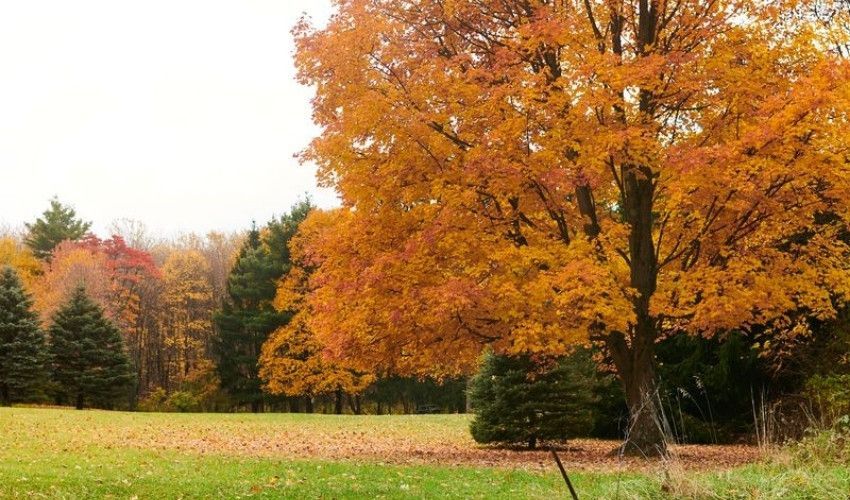
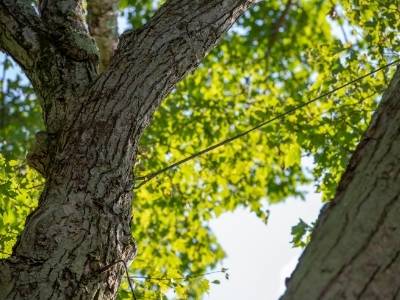
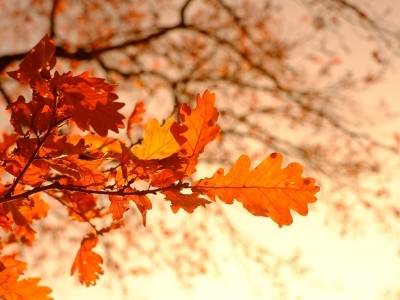
Early fall color can be part of a tree’s normal seasonal transition, especially when the change develops gradually across the canopy.
What’s Causing Trees to Drop Leaves Early in Geauga County?
Early color change or scattered leaf drop in late summer doesn’t necessarily mean a tree is dying. Trees may shed leaves early in response to seasonal changes or stress, but insects, disease, root problems, and other conditions can produce similar symptoms.
This year’s weather provides an important clue. Geauga County has had an unusually wet year, with 0% of the county in drought as of late summer. That makes drought a less likely explanation for widespread early leaf drop and puts more attention on problems associated with prolonged moisture, including fungal disease and poor root-zone drainage.
Common causes to consider include:
- Normal Seasonal Shutdown: Some trees begin slowing down for the season earlier than others, especially after periods of environmental stress. Earlier color and leaf drop can occur without indicating long-term decline.
- Heat and Exposure: Even when soil moisture is adequate, prolonged heat, intense sun, and wind can scorch foliage and contribute to premature leaf drop.
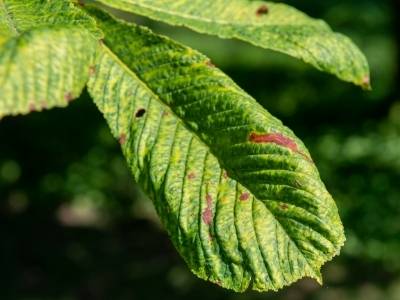
- Fungal Disease: Damp, humid conditions can favor fungal diseases that cause spotting, discoloration, and premature leaf loss. Tar spot on maples and anthracnose are two examples that are generally manageable and rarely threaten an otherwise healthy tree.
- Root-Zone Drainage Problems: Saturated soil can limit the oxygen available to roots, resulting in yellowing, thinning foliage, and premature leaf drop even when water is abundant.
- Girdling Roots: Roots that circle the trunk instead of growing outward can restrict vascular tissue over time, leading to gradual canopy decline and early leaf loss.
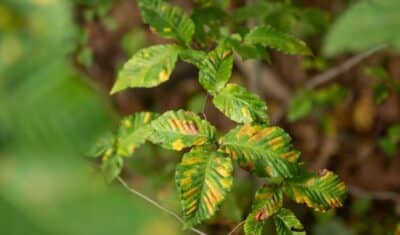
- Beech Leaf Disease: Beech trees showing distinctive leaf symptoms warrant closer attention because beech leaf disease is a more serious concern. Independent Tree covers identification and management on its beech leaf disease treatment page.
- Nutrient Deficiencies: Compacted or nutrient-poor soil can contribute to chlorosis and thinning foliage, particularly around mature trees near driveways or areas disturbed by construction. Depending on the underlying deficiency, deep root fertilization may be part of the treatment.
Because several of these problems can produce similar-looking leaf loss, the pattern of symptoms often provides better clues than early leaf drop alone.
How Can You Tell If Early Leaf Drop Is Normal or a Warning Sign?
How Can You Tell If Early Leaf Drop Is Normal or a Warning Sign?
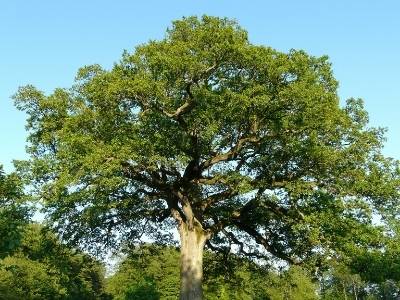
Look at where the symptoms appear and how quickly they’re progressing. Gradual changes affecting much of the canopy are more likely to reflect seasonal or environmental stress, while sudden, localized, or worsening symptoms deserve a closer look.
Early leaf drop may be less concerning when:
- Color changes gradually across most of the canopy.
- Leaf drop is concentrated on the sunniest or most exposed portions of the tree.
- Leaves wilt during the hottest part of the day but recover by evening.
- An ornamental species known for early fall color changes ahead of surrounding trees.
Have the tree evaluated when:
- Leaf loss or discoloration is concentrated on one branch or one side of the tree.
- Dieback appears in the upper crown.
- Bark is cracking, peeling, or oozing.
- The canopy thins noticeably over a short period.
If symptoms are localized, progressing quickly, or accompanied by other signs of decline, Independent Tree’s disease and pest guide can help you identify other symptoms that may point to the cause.
Not sure whether a bare branch is dead? Gently scratch a small patch of bark on a pencil-width twig. Green, moist tissue underneath means that section is still alive, while brown, dry tissue suggests it has died. Check several twigs, since one dead branch doesn’t mean the entire tree is dead.
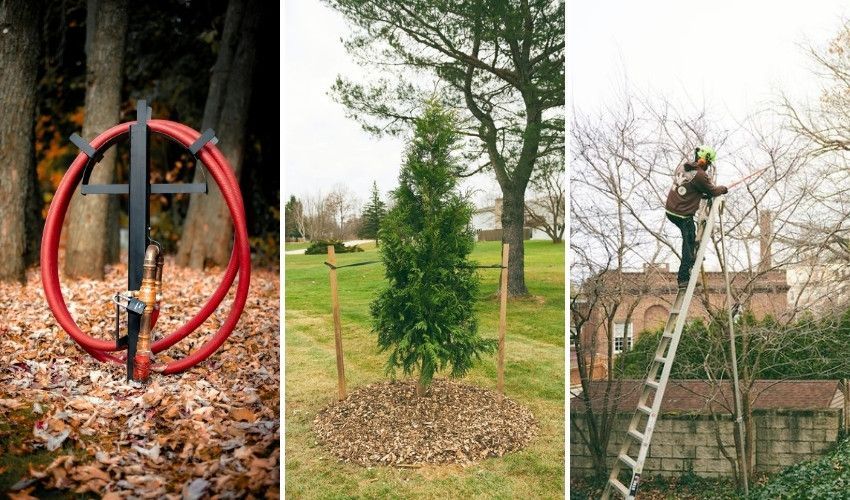
Deep watering, proper mulching, and limiting pruning to necessary work can help support a stressed tree as it heads into fall.
What Should You Do If Your Tree Is Dropping Leaves Early?
A few straightforward steps can support a stressed tree while you watch for how it responds.
- Water Deeply and Infrequently: Water to the dripline (the outer edge of the canopy rather than the base of the trunk) since that is where a tree’s active feeder roots take up the most water. Even in a wet year, uneven rainfall can leave root zones inconsistently moist.
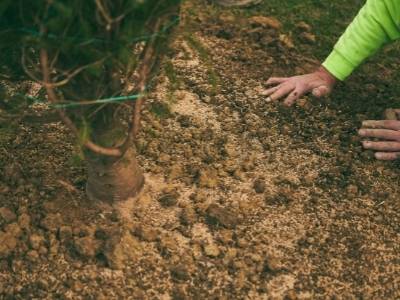
- Mulch Properly: Apply 2 to 4 inches of mulch, kept off the trunk, to moderate soil temperature and retain moisture.
- Hold Off on Routine Fertilizing: Fertilizer isn’t automatically the answer when a tree shows signs of stress. Before applying it, have the tree and its growing conditions evaluated to determine what’s causing the early leaf drop and whether fertilization or soil improvement would actually help.
- Limit Pruning to Hazardous Branches for Now: Routine structural pruning cuts add wounds a stressed tree has to manage on top of whatever is already stressing it, but dead or broken branches that pose a safety risk should still come down regardless of season.
These steps address the tree’s immediate stress, but they will not fix an underlying disease or structural issue on their own.
When Does Early Leaf Drop Need an Arborist’s Diagnosis?
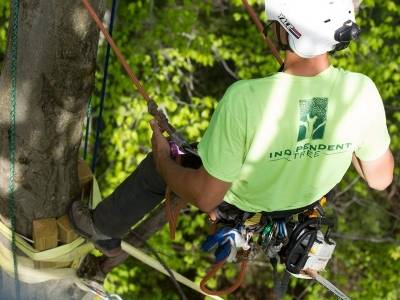
Leaf symptoms alone don’t always reveal what’s happening inside the tree or below ground. When early leaf drop raises concerns about the tree’s overall health, an ISA Certified Arborist can evaluate the canopy, trunk, roots, and growing conditions together to identify the underlying cause.
Signs that warrant a professional evaluation include:
- Symptoms Returning for a Second Year: The same branch or area declines again the following season rather than returning to normal.
- Rapid Decline: The canopy thins or changes noticeably over a short period rather than gradually throughout the season.
- Symptoms Spreading: Discoloration, leaf loss, or dieback moves from one area of the canopy into previously healthy branches.
- Fungal Growth at the Trunk or Root Flare: Mushrooms or other fungal growth around the base can be associated with underlying wood or root decay.
- Delayed Leaf-Out: The tree fails to leaf out normally the following spring.
If you’re seeing one or more of these patterns, schedule a diagnosis with a Certified Arborist to determine what’s causing the decline and whether the tree needs treatment or monitoring.
Frequently Asked Questions About Early Leaf Drop
Will a tree that dropped leaves early come back next spring?
In most cases, yes, especially when the cause was heat or moisture stress rather than disease. Trees with localized, worsening symptoms are the ones worth watching into spring rather than assuming a full recovery.
Does early leaf drop mean my tree will need to be removed?
Rarely, on its own. Leaf drop is a canopy symptom, not a structural one, and removal decisions depend on trunk and root condition rather than leaf drop timing.
Can a tree be alive with no leaves?
Yes. A tree without leaves can still be alive if the buds, bark, and root system are healthy, since leaves are only one visible piece of the whole picture. The scratch test on a few branches is the fastest way to check for green, moist tissue underneath the bark before assuming the worst.
Can a disease causing early leaf drop spread to nearby trees?
Yes, for fungal diseases like tar spot or anthracnose, which spread by airborne spores, can affect nearby trees of the same species. Stress from soil, drainage, or heat conditions isn’t contagious, since it’s specific to that tree’s site.
Is early leaf drop more common in certain types of trees?
Yes. Species such as flowering cherries and some maples are more prone to early color change or leaf shed under stress than others, which is one reason identifying the species matters when something looks off.
Should I rake and dispose of leaves that dropped early, or leave them?
If the leaves show signs of fungal disease, such as spotting, blotching, or unusual discoloration, rake them up and dispose of them rather than leaving them beneath the tree. Removing infected leaves can reduce the amount of fungal material that remains near the tree and may reinfect new foliage the following season. Leaves that dropped because of heat, environmental stress, or normal seasonal change can be handled as you normally would with fall leaves.
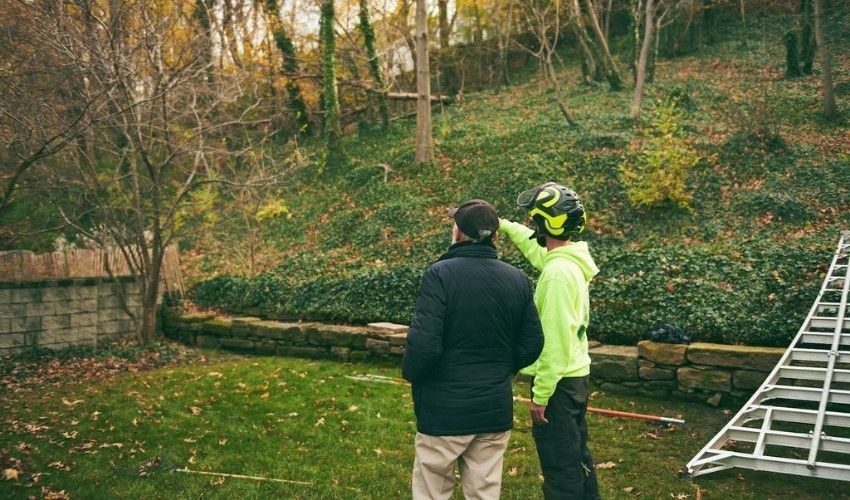
When leaf loss is rapid, spreading, or returning year after year, an arborist can evaluate the tree in person and determine whether it needs treatment, monitoring, or no action at all.
Get a Clear Diagnosis for Your Tree’s Leaf Drop
Not every changing leaf signals a problem, but you don’t have to guess what’s happening with your tree. One of Independent Tree’s Certified Arborists can evaluate the symptoms on your property, identify the likely cause, and determine whether the tree needs treatment, continued monitoring, or no action at all.
You can schedule an evaluation with Independent Tree online, or call us at 440-367-4004 to have your tree evaluated while the symptoms are still visible.
Recent Articles
Topics
About The Author


STAY IN THE LOOP
WITH OUR
LATEST UPDATES
"*" indicates required fields

