Beech leaf disease was first identified in Lake County, Ohio, when homeowners had few options for protecting an affected tree. More than a decade later, research has come a long way, changing what we know about managing BLD and which trees may benefit from treatment.
For Northeast Ohio homeowners, that makes early recognition more important than ever. The condition of the tree, how far the disease has progressed, and when you take action can all influence what options are still available.
Key Takeaways
- Beech leaf disease can be managed, but it’s a long-term commitment, not a one-time cure.
- Local research shows real mortality risk, which makes early treatment decisions matter.
- Treatment method and timing depend on tree size and how far the disease has progressed.
- Not every beech is a good treatment candidate; a professional assessment determines that.
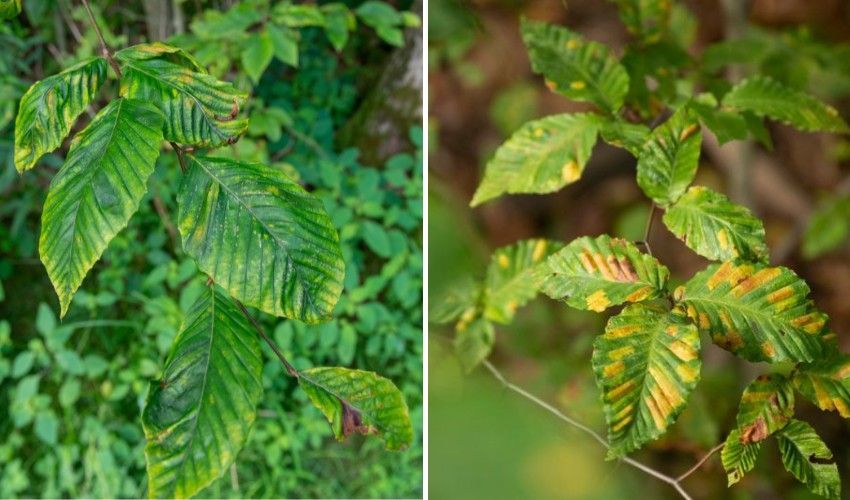
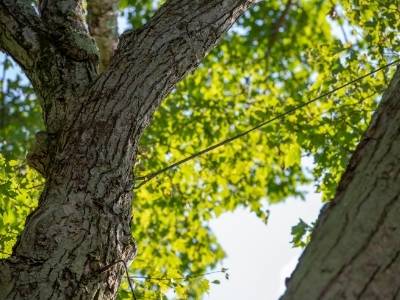
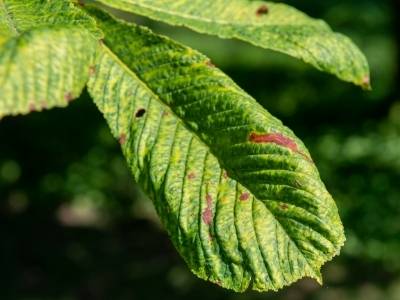
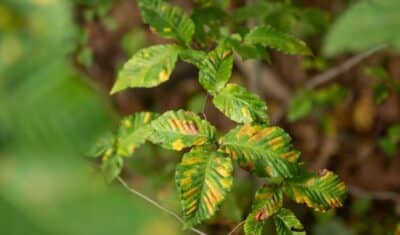
As beech leaf disease progresses, affected leaves can develop pronounced banding, yellowing, browning, and damaged tissue, reducing the tree’s ability to photosynthesize normally.
How Do You Know Your Beech Tree Has Beech Leaf Disease?
Beech leaf disease has one signature symptom that sets it apart from other stress and disease issues on beech trees. Dark green to black bands run between the leaf veins, and they’re most visible when you hold a leaf up to the light or look at the canopy from below with the sun behind it. Healthy tissue lets light through, while the banded areas stay dark.
Signs to Look For
- Interveinal Banding : Visible dark stripes running between the leaf veins.
- Thickened, Puckered Leaf Tissue: Present in the banded areas as the disease progresses.
- Curled or Leathery Leaves: Instead of the normal flat, smooth texture.
- Canopy Thinning: Common in advanced cases, once enough leaf tissue is affected.
Where Symptoms Show Up First
Symptoms can be unevenly distributed through the canopy, but lower branches are often more heavily affected than the upper canopy. That makes reachable lower-canopy leaves useful for confirming the characteristic banding, while symptoms high in a mature tree can be harder to see from the ground.
Ruling Out Look-Alikes
Ordinary leaf scorch from summer heat and drought can cause browning along leaf margins, but it doesn’t produce the distinct dark banding between veins that beech leaf disease does. If you’re seeing uniform browning at the leaf edges rather than striped, thickened bands, you may be dealing with heat or drought stress rather than BLD. Either way, a professional assessment confirms which one you’re facing.
If you’re seeing this characteristic banding on American or European beech, BLD is a strong possibility and can be confirmed through a professional assessment or diagnostic testing.
Can a Beech Tree with Beech Leaf Disease Be Saved?
Sometimes, and it depends on how early you catch it. Beech leaf disease is caused by a microscopic nematode that lives and feeds inside leaf buds, and there is currently no treatment known to eradicate BLD from an infected tree permanently. What it does have is a growing body of local research showing that treatment, applied early enough, can meaningfully change a tree’s trajectory.
What Local Research Shows
A long-term study out of Holden Forests & Gardens tracked American beech in Cuyahoga County since beech leaf disease was first observed at the research site in 2014. The study found:
- Among the trees monitored in the study, 30% died over the following decade, with mortality accelerating sharply during the study’s most recent three years.
- Sapling mortality reached as high as 14% in a single year, in 2022.
- BLD-affected leaves can lose up to roughly 60% of their normal photosynthetic capacity, which explains why declining trees lose vigor well before dieback becomes visually obvious.
IMPORTANT: Beech leaf disease is a genuine mortality risk in this region, and it doesn’t move at the same speed for every tree. That 30% figure comes from a specific research population and should not be interpreted as the predicted mortality rate for an individual landscape tree.
Typical Progression without Treatment
In many larger trees, symptoms are initially more noticeable in the lower canopy and can become more widespread over successive growing seasons. As more leaf tissue loses photosynthetic function each year, canopy thinning accelerates. The tree is essentially running on a shrinking fuel supply, and the decline compounds rather than staying flat.
How fast that decline plays out depends on the tree’s size and age. Saplings can decline and die within a few years of infection, since they have less stored energy reserve to draw on. Mature trees may decline over several years, while smaller trees can deteriorate much faster, which is why early detection still matters, even for mature specimen trees.
Honest Prognosis
Treatment can reduce nematode populations and suppress symptoms, potentially slowing decline, but it has not been established as a permanent cure or guaranteed long-term rescue. The “can it be saved” answer isn’t a flat yes or no. It’s a question of degree, and the factors below determine where a specific tree falls on that scale.
Treatment Candidacy Factors
A Certified Arborist evaluates several factors to determine whether treatment is worth pursuing on a specific tree.
- Limited Canopy Dieback: Trees with less advanced decline generally have more opportunity to benefit from treatment than trees with extensive dieback.
- No Major Structural Issues: Decay or girdling roots can limit a tree’s ability to take up and benefit from treatment, regardless of how mild the BLD symptoms look.
- Reasonable Site Value: A mature specimen beech anchoring your landscape is a different investment decision than a volunteer sapling in the back of a wooded lot.
- Overall Tree Health and Vigor: A beech already stressed by drought, soil compaction, or construction damage may not respond to BLD treatment as well as an otherwise healthy tree would.
Beech leaf disease doesn’t exist in isolation. It’s one entry in a broader pattern of insect and disease pressure facing trees across the region, which is worth understanding if you’re managing more than one species on your property.
What Treatment Options Are Available for Beech Leaf Disease?
The treatment approach depends largely on the size of the tree, since the application method that works well on a mature shade tree isn’t practical or necessary on a young sapling.
Macro-Injection for Larger Beech Trees
For larger landscape beeches, systemic thiabendazole injection is one of the principal treatment options.
- Arbotect 20-S, a thiabendazole hypophosphite product, has an Ohio Section 24(c) Special Local Need registration for managing BLD use in Ohio.
- A single treatment generally protects for roughly two years before the tree needs to be retreated.
- Injection puts the active ingredient directly into the tree’s vascular system, which is the preferred method for larger trees where thorough foliar coverage would be difficult.
Foliar & Soil Treatments for Smaller Trees
Foliar fluopyram programs are another research-supported approach where the product is appropriately labeled and the site is suitable. Smaller beech trees have additional options.
- In Bartlett and Holden collaborative research trials, including sites in Ohio, a foliar fluopyram spray reduced over 90% of live nematodes when applied at the correct time in the seasonal window.
- A soil-applied product has also been trialed specifically on smaller-diameter Ohio beech, with positive early results. Long-term performance on larger trees hasn’t yet been established, so it’s best considered an emerging option rather than a proven standard.
These treatments are applied as part of an ongoing plant health care program, since beech leaf disease management is a multi-year relationship rather than a single visit. Learn how IT’s plant health care program applies these treatments.
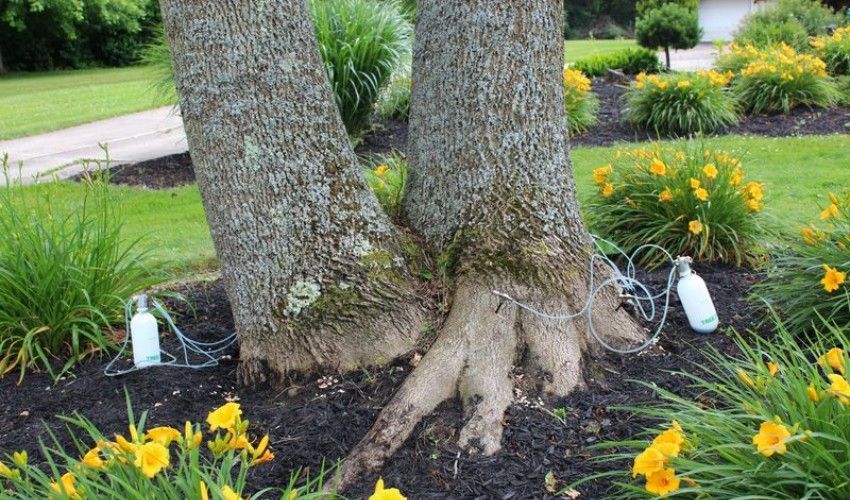
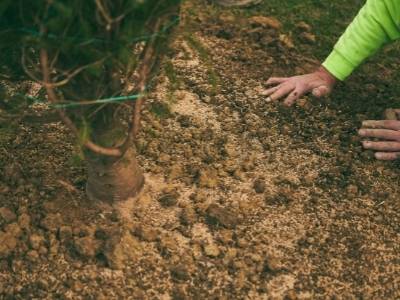
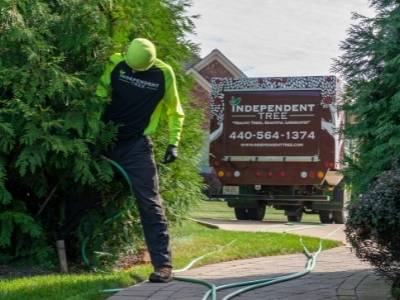
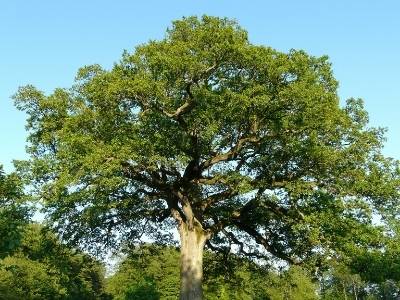
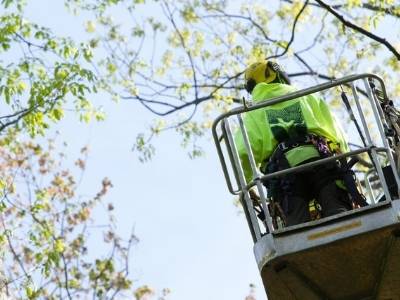
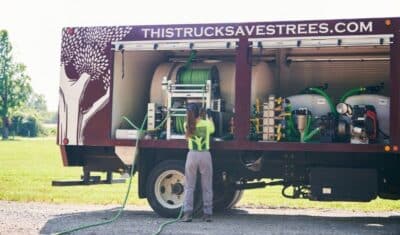
For larger beech trees, systemic injection delivers treatment directly into the tree’s vascular system and is one option for managing beech leaf disease.
When Is the Best Time to Treat Beech Leaf Disease?
The best timing depends on the treatment being used. Because BLD research is still evolving, treatment should follow current product labels and research-based recommendations rather than a fixed calendar date.
Foliar Treatment Timing
Fluopyram treatments need to reach nematodes while they’re active in the foliage and before they move into buds for the winter. Research has traditionally focused on later-summer applications, although newer findings suggest earlier summer treatment may also be effective.
Macro-Injection Timing
Systemic thiabendazole injections aren’t tied to the same narrow window. Because the treatment moves through the tree’s vascular system rather than relying on direct contact with nematodes on the leaves, arborists have more flexibility in determining when to treat.
What Should I Do if My Beech Tree Has Beech Leaf Disease?
If you’ve spotted interveinal banding or curling leaves on a beech tree, the most useful next step is getting a professional assessment for that specific tree, not guessing at a treatment plan on your own.
Get a Professional Diagnosis First
Beech leaf disease symptoms can resemble other forms of tree stress, so a proper diagnosis from an ISA Certified Arborist confirms whether BLD or another issue is responsible. It also evaluates your tree against the candidacy factors covered earlier, including dieback level, structural condition, site value, and overall vigor. The earlier that assessment happens, the more treatment options stay on the table.
What an Arborist Assessment Includes
- A canopy and dieback evaluation.
- A check for structural issues like decay or root problems.
- A treatment recommendation, whether that’s macro-injection, foliar spray, or soil treatment, based on your tree’s size and condition.
That assessment is the start of an ongoing management relationship, not a one-time fix, since beech leaf disease requires monitoring and retreatment over the life of the tree.
If you have a beech showing early symptoms, schedule a beech assessment while there’s still time for treatment to make a meaningful difference.
Frequently Asked Questions About Beech Leaf Disease
Is beech leaf disease contagious to other tree species?
No. Beech leaf disease affects American, European, and other beech species specifically, and it isn’t known to spread to unrelated species like maples or oaks.
Does raking or removing fallen leaves help control beech leaf disease?
Raking fallen leaves is not currently considered a proven way to control BLD. The nematodes overwinter primarily in beech buds, so leaf removal should not be presented as a stand-alone disease-control measure.
Does pruning help manage beech leaf disease?
Pruning does not directly control the nematode, and unnecessary or excessive pruning can create additional wounds and stress. It isn’t recommended as a standalone approach.
How often does a treated beech tree need to be retreated?
Thiabendazole injection treatments, such as Arbotect 20-S, have demonstrated approximately two years of protection in research and are commonly reassessed on that interval.
Can homeowners treat beech leaf disease themselves?
Effective treatments involve pesticide products with specific labels, precise timing and application requirements, and in the case of injection, specialized equipment and training. An arborist or licensed pesticide applicator can determine which treatment is legal and appropriate for the tree and site.
What does beech leaf disease treatment cost?
Cost depends on your tree’s size, the treatment method used, and site conditions, so it varies from property to property. A Certified Arborist can give you a specific estimate after assessing your tree.
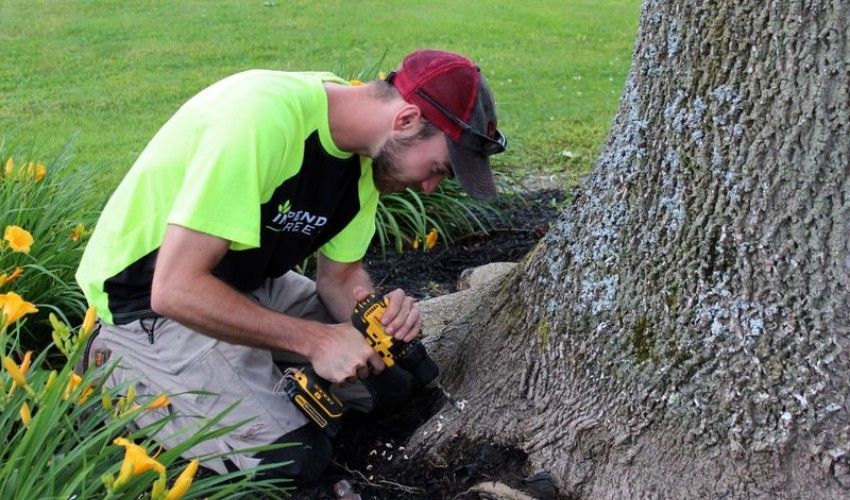
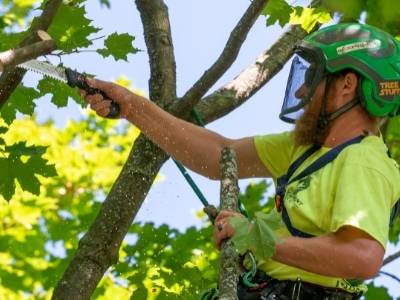
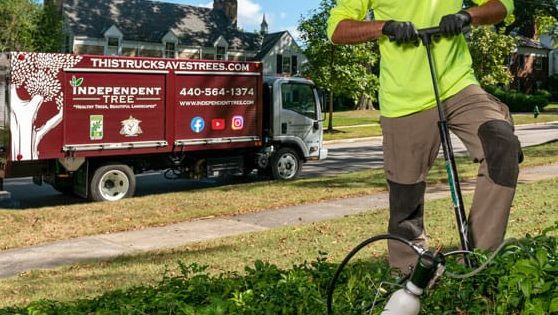
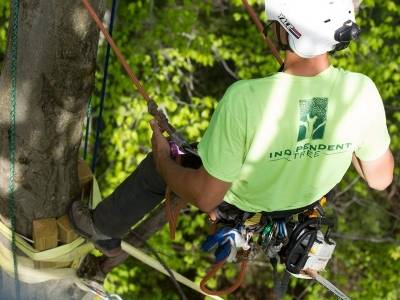
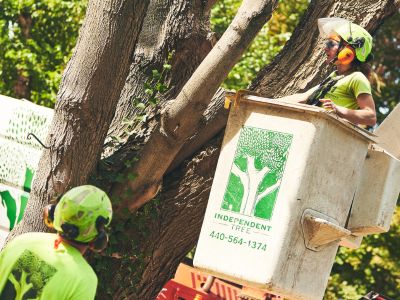
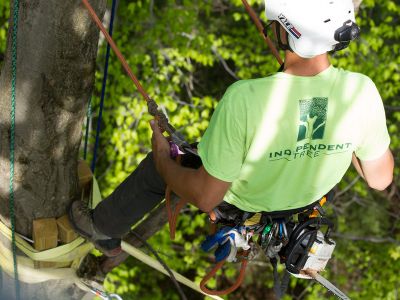
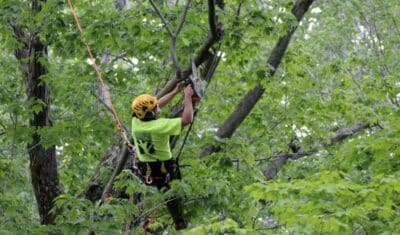
A plant health care technician prepares a mature beech for systemic injection, a treatment method used to manage beech leaf disease in larger trees.
Protect Your Beech Tree With Help From Independent Tree
Beech leaf disease is manageable with the right diagnosis and the right timing, but it’s an honest, ongoing commitment rather than a guaranteed fix. That’s not guesswork. It’s backed by over a decade of research on Ohio’s own beech trees, from the same region where the disease was first identified.
If you’re seeing symptoms, having the tree evaluated sooner preserves the widest range of treatment options. Call us at 440-367-4004 or schedule a beech assessment with a Certified Arborist to find out where your tree stands and what your options are.
CAN YOUR BEECH TREE BE TREATED?
Beech leaf disease doesn’t affect every tree the same way. An assessment from Independent Tree’s ISA Certified Arborists can determine how far the disease has progressed and whether treatment is still a good option.Recent Articles
Topics
About The Author

STAY IN THE LOOP
WITH OUR
LATEST UPDATES
"*" indicates required fields

