As spring arrives in Northeast Ohio, your trees may be harboring subtle problems developing just under the surface. While you’re admiring the first green buds and planning your garden, fungal spores are quietly establishing infections that could devastate your landscape within weeks. What appears to be healthy new growth might already be compromised by diseases that thrive in our region’s humid spring conditions.
Those cool temperatures, rain, and humidity create the ideal environment for many common tree diseases to take hold. Because these issues often begin early in the season, knowing what to look for now can make a big difference in how well they can be managed.
Key Takeaways
- Apple scab, anthracnose, sycamore anthracnose, cedar-apple rust, powdery mildew, fire blight, and black knot are the most common spring diseases affecting Northeast Ohio trees, each with distinctive symptoms that help with proper identification.
- Early spring identification during weekly inspections from April through June allows homeowners to implement effective treatments before diseases cause permanent damage, defoliation, or tree death.
- Professional diagnosis is essential because many spring disease symptoms appear similar initially, but each requires different treatment approaches and timing for optimal results.
- Treatment timing depends on growing degree days rather than calendar dates, with optimal windows varying by 2-3 weeks each year based on spring temperature patterns and weather conditions.
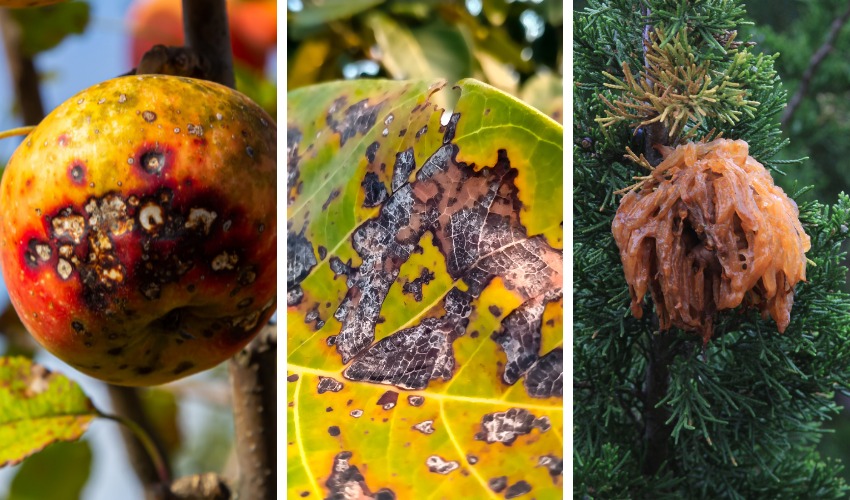
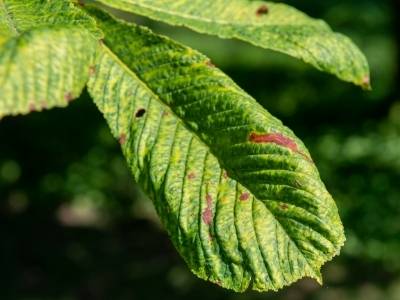
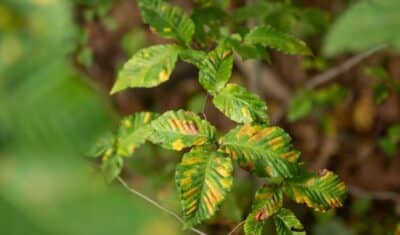
Apple scab, anthracnose, and cedar-apple rust each create distinctive symptoms that help with accurate identification.
What Are the Most Common Spring Tree Diseases in Northeast Ohio?
Each of these diseases shows up a little differently, which is why they’re often missed early. Knowing the common signs and patterns can help you catch issues sooner and avoid bigger problems later.
1. Apple Scab
Apple scab attacks trees early in the season, starting with small olive-green to dark spots on leaves. As the disease develops through wet spring weather, those spots expand and can cause leaves to curl, pucker, or become distorted.
It can also affect fruit, creating dark, rough lesions that may crack or become misshapen. Infected leaves often turn yellow and drop by mid-summer, which can weaken the tree over time.
In Northeast Ohio, apple scab most commonly affects crabapple, apple, mountain ash, and pear trees. The early olive-green spots are a key identifier, though they’re often mistaken for other leaf diseases until fruit damage appears.
2. Anthracnose
Anthracnose creates irregularly shaped brown or tan spots with darker margins that appear on leaves after periods of wet spring weather. Unlike the circular spots of many fungal diseases, anthracnose spots have jagged, uneven edges that help with identification.
The disease typically starts on lower branches and gradually moves upward through the tree canopy during successive rain events. Infected leaves may become curled, cupped, or develop holes as spots enlarge and merge together. Some anthracnose infections can continue causing summer leaf spot problems if left untreated during spring.
Anthracnose affects many common Northeast Ohio trees, including:
- Dogwood
- Oak
- Maple
- Ash
3. Sycamore Anthracnose
Sycamore anthracnose causes much more severe damage than general anthracnose, often resulting in complete defoliation of entire branches during cool, wet spring conditions. New growth is especially susceptible, with severe infections killing 90 percent of new twigs. The disease is rarely fatal, but extended infections can leave a tree stressed and with spotty branch coverage.
Dark, sunken cankers may develop on twigs and branches where the fungus overwinters. These cankers serve as infection sources for new growth each spring, creating recurring problems for untreated trees.
Only sycamore trees suffer from this specific anthracnose strain, including:
- American sycamore
- London plane tree
- Oriental plane tree
4. Cedar-Apple Rust
Cedar-apple rust requires both a conifer in the Cupressacae family (including certain types of cedar, cypress, juniper, and redwoods) and apple family trees growing near each other to complete its complex life cycle. On apple and crabapple trees, the disease creates bright orange-yellow spots on upper leaf surfaces that may have small black dots in their centers.
On conifers, the same fungus produces orange, gelatinous, horn-like growths that appear after spring rains. These dramatic structures release spores that infect nearby apple trees, continuing the disease cycle. Don’t confuse these growths with normal galls on trees, which are typically harmless.
The bright orange coloration on apple leaves makes cedar-apple rust relatively easy to identify compared to other spring diseases. However, the requirement for both host species means the disease only occurs where Cupressacae conifers and apple trees grow within several hundred feet of each other.
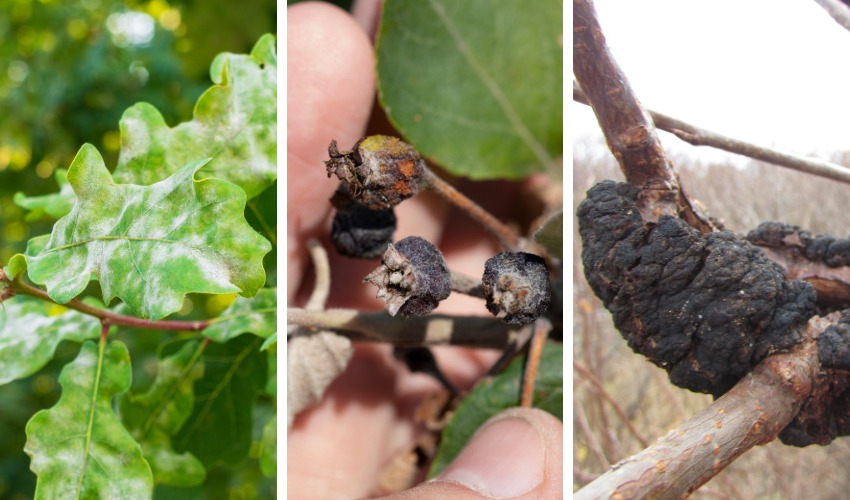
Powdery mildew’s white coating and black knot’s warty growths are among the most visually distinctive spring tree diseases.
5. Powdery Mildew
Powdery mildew covers leaf surfaces with a distinctive white, powdery coating that looks like someone dusted the foliage with flour. This coating typically starts as small white patches before spreading to cover the entire leaf surface during humid conditions with warm days and cool nights.
New leaves may become twisted, stunted, or discolored as the fungus interferes with normal leaf development. Unlike most fungal diseases that require wet conditions, powdery mildew thrives in humid but not necessarily wet environments.
Common targets in Northeast Ohio include
- Lilac
- Dogwood
- Crabapple
- Ornamental shrubs
The white powdery appearance is unmistakable and completely different from other spring diseases that cause spots or lesions. Proper pruning of ornamental and shade trees can improve air circulation and reduce powdery mildew pressure.
6. Fire Blight
Fire blight earned its name from the scorched appearance it creates. Leaves and shoots turn black or dark brown as if burned by fire. Branch tips often curl downward in a characteristic “shepherd’s crook” shape that helps distinguish fire blight from other diseases.
Amber-colored bacterial ooze may appear on infected branches during humid weather, particularly after rain events. The disease spreads rapidly through trees during warm, wet spring conditions when new growth is most susceptible.
Fire blight affects apple, pear, crabapple, hawthorn, and mountain ash trees. The distinctive blackened areas that progress from branch tips toward the trunk in streaking patterns make fire blight easier to identify than many fungal diseases.
7. Black Knot
Black knot forms hard, black, irregular growths around branches that range from small bumps to large, tumor-like masses several inches long. These warty growths gradually enlarge each year, eventually girdling and killing branches above the infection site.
Blank knot growth persists on branches year-round, making it unique amongst the spring tree diseases we see in Ohio. Look for large knots that encircle branches to cut off water and nutrient flow.
Black knot most commonly attacks cherry and plum trees, especially ornamental varieties popular in Northeast Ohio landscapes. The year-round visibility and distinctive warty appearance make black knot the easiest spring disease to identify, though damage occurs progressively over multiple growing seasons.
When Is the Right Time to Treat Tree Diseases in Northeast Ohio?
Treatment timing for spring diseases depends more on growing degree days than calendar dates, which means effective windows can vary 2-3 weeks from year to year based on spring and winter temperatures. Growing degree days determine when diseases become active and treatments work most effectively, making professional monitoring essential for optimal results.
Planning your spring tree and shrub treatments during late winter ensures you’re prepared for the optimal treatment windows.
| Disease | When Symptoms Appear | Treatment Window |
|---|---|---|
| Apple Scab | Early April (bud break) | Bud break through May |
| Anthracnose | Mid-April (bud swell/emergence) | Bud swell + follow-ups |
| Sycamore Anthracnose | April–May (early leaf emergence) | Fall injection preferred |
| Cedar-Apple Rust | Late April–May (after leaf-out) | Early spring protectant |
| Powdery Mildew | May–June (humid conditions) | As symptoms develop |
| Fire Blight | March–April (bloom period) | During bloom period |
| Black Knot | Year-round visible | Dormant season removal |
Frequently Asked Questions Spring Tree Diseases
How can I tell which tree disease is affecting my tree?
Each disease has distinctive symptoms, like apple scab’s olive-green spots, powdery mildew’s white coating, fire blight’s scorched appearance with shepherd’s crook branch tips, or black knot’s warty growths. Professional identification ensures accurate diagnosis since some symptoms can appear similar.
When should I start inspecting my trees for disease symptoms?
Begin weekly inspections in early April, when buds break, and continuing through June, when most spring diseases become visible. Early detection allows for more effective treatment before diseases cause irreversible damage to your trees. Spring tree care includes regular monitoring for these common problems.
Can tree diseases spread from one tree to another?
Yes, fungal spores and bacteria spread through wind, rain, insects, and contaminated pruning tools, making early identification and treatment crucial to prevent neighborhood-wide outbreaks. Some diseases, like cedar-apple rust require specific host combinations to spread.
How can I prevent tree diseases from spreading?
Several basic practices can help reduce disease risk:
- Rake and remove fallen leaves in autumn, as many fungi overwinter in leaf debris
- Improve air circulation by pruning overcrowded branches
- Water trees at soil level rather than wetting leaves with sprinklers
- Avoid wounding trees during lawn care activities
- Plant disease-resistant varieties when adding new trees
These cultural practices work best as prevention; once diseases are established, professional treatment is usually necessary.
What should I do if my tree has a disease?
If you think your tree has a disease, contact a Certified Arborist for professional identification and treatment recommendations, as many diseases require different treatment approaches and timing. Attempting treatment without a proper diagnosis often proves ineffective and may delay necessary interventions. Tree health management programs provide ongoing monitoring and preventive care.
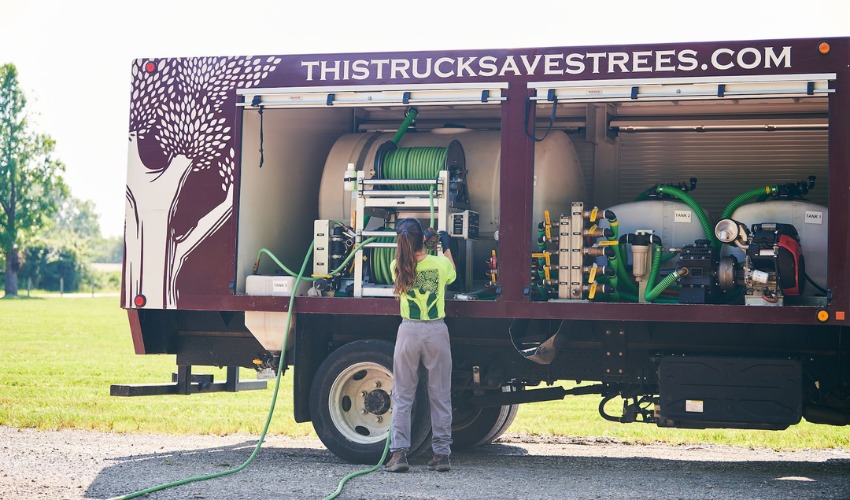
Professional disease treatments require specialized equipment and expertise to protect your Northeast Ohio trees effectively.
Protect Your Northeast Ohio Trees This Spring with Help from Independent Tree
Early identification of these seven spring tree diseases can mean the difference between healthy trees and costly removals. While similar symptoms may confuse homeowners, understanding the distinctive characteristics of each disease helps you recognize when professional intervention is needed.
Don’t wait to address tree disease — the team at Independent Tree has extensive experience treating Northeast Ohio trees and knows exactly when to act for the most effective results. Call us today at 440-564-1374 or request an estimate online.
Don't Let Bad Pruning Cuts Invite Spring Disease
Fresh pruning wounds are an open door for the same fungi and bacteria causing spring disease in Northeast Ohio. The wrong cuts — made at the wrong time — can make your trees more vulnerable, not less. Learn the five pruning mistakes that leave trees exposed to infection and decay, so you can protect your landscape before disease takes hold.Recent Articles
Topics
About The Author

STAY IN THE LOOP
WITH OUR
LATEST UPDATES
"*" indicates required fields

