
If your mature tree has started thinning, producing smaller leaves, or looking less vigorous than it used to, you may be wondering whether deep root fertilization can bring it back. In Northeast Ohio, nutrient-poor or compacted soil is one possible cause, especially for older trees growing in established landscapes.
But fertilization isn’t a cure-all. Many of the same symptoms can also be caused by pests, disease, drought, or root damage. Before investing in treatment, it’s important to determine what’s causing the decline. Here’s when deep root fertilization can help—and when your tree may need a different solution.
Key Takeaways
- A thinning or pale canopy on a mature tree often points to poor soil and low nutrients, but the same symptoms can signal pests, disease, or root damage—so a diagnosis should come before any treatment.
- Deep root fertilization injects nutrients and organic matter straight into the feeder-root zone, where surface fertilizers and lawn treatments can’t reach.
- Many mature trees in Northeast Ohio struggle because decades of development leave the soil compacted, making it harder for roots to access the water, oxygen, and nutrients they need.
- Fall is the preferred window for fertilizing mature trees here, with a cutoff once the ground gets too cold for roots to take up what they’re given.
Why Does a Mature Tree Start Looking Thin, Pale, or Tired?
A mature tree can start looking thin, pale, or less vigorous when its roots can no longer access the water, oxygen, and nutrients they need. That often happens gradually as the soil around the tree changes over time. Even a healthy maple or oak can begin to decline if the growing conditions below ground deteriorate.
Over the years, several common conditions can reduce soil quality around an established tree:
- Nothing Recycles Back Into the Soil: Fallen leaves get raked and hauled away, so the nutrients they’d normally return never make it back into the ground.
- The Ground Gets Packed Down: Construction, vehicles, and foot traffic compact the soil, squeezing out the air pockets roots need to absorb water and nutrients.
- The Lawn Takes Its Share: Turf grass competes with the tree for water and nutrients in the upper soil.
All of this leaves the soil holding less water and offering fewer nutrients, even when the tree looks fine above ground. Roots that can’t push through packed earth can’t spread to find food, so a mature tree on an older lot—where the ground has had decades to harden —slowly runs short. The decline is easy to miss, but a few simple checks can tell you whether the soil around your trees is healthy or quietly working against them.
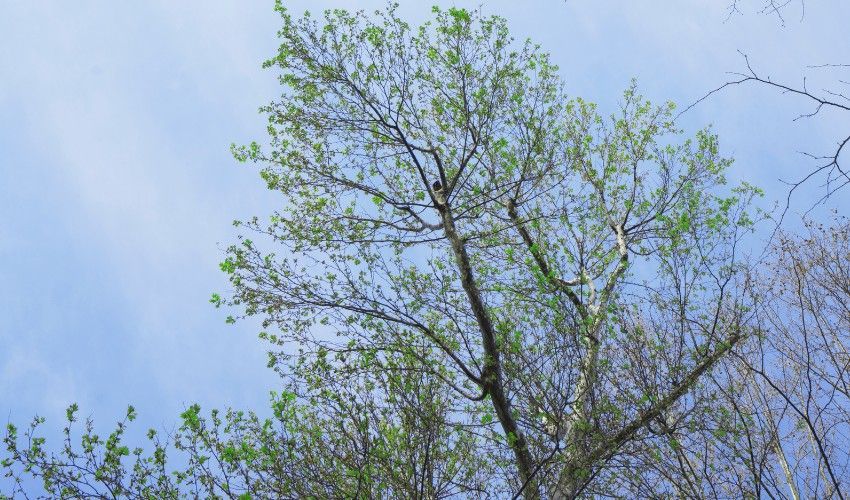
A thinning or pale canopy is often the first visible sign that a mature tree’s soil is lacking nutrients.
How Does Deep Root Fertilization Help a Struggling Tree?
A confirmed soil or nutrient problem is exactly what deep root fertilization is built to fix. For compacted, nutrient-poor ground, its value is that it works on two fronts at once: it feeds the tree, and it improves the soil the tree has to live in.
- The Tree Gets What It Was Missing : With the minerals it couldn’t pull from depleted soil back within reach, the tree can rebuild a fuller canopy and put on healthy new growth.
- Compacted Soil Starts to Open Up : The organic matter in the blend loosens packed ground over time, giving feeder roots room to spread instead of hitting a wall.
- Roots Can Breathe Again : As the soil loosens, air and water move through it more freely, so roots take up nutrients far more easily than they can in dense, airless ground.
- The Tree Is Better Defended : A tree with steady access to nutrients stands up to pests, disease, and drought stress better than one that’s already running short.
None of this happens overnight; a mature tree rebuilds vigor over a season or two, not in a single flush. But because the treatment addresses the soil and not just the symptoms, the improvement tends to hold rather than fade.
Is Your Tree a Good Candidate for Deep Root Fertilization?
Your tree may be a good candidate for deep root fertilization if it’s an established tree showing declining vigor that traces back to poor soil – but you can’t confirm that cause just by looking, which is why a proper diagnosis comes before any treatment.
In practice, the trees that benefit most are mature shade trees growing in the compacted soil of older, developed lots, or near driveways, patios, and recent construction where the root zone has taken a beating.
Signs Your Tree May Be Struggling
A struggling mature tree tends to show one or more of these signs:
- Thinning Canopy : The crown looks sparse or see-through compared with how full it was in past years.
- Smaller Leaves : The tree produces fewer and smaller leaves than it used to.
- Early Color or Leaf Drop : Leaves change color or fall well ahead of the rest of the neighborhood.
- Active Leaf Loss : The tree sheds leaves through the growing season, not just in fall.
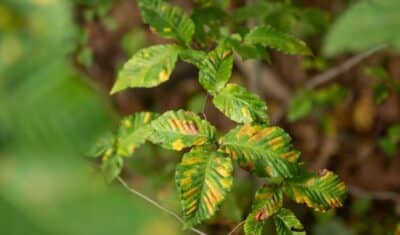
- Yellowing or Pale Leaves : Foliage loses its deep green and fades, a condition called chlorosis.
- Slow Growth : New growth is minimal, stunted, or has stalled out entirely.
- Dieback in the Upper Canopy : Twigs and small branches near the top of the tree stop leafing out and gradually die back.
What Else Causes a Tree to Thin or Lose Vigor?
Every one of those signs can also come from something fertilizer won’t fix. Insect pests, disease, girdling roots, and drought stress can all thin a canopy or fade a tree’s color, and many of the common tree diseases and pests in Northeast Ohio produce these exact symptoms. Some of them only get worse if the real problem goes untreated while you feed for nutrients.
That’s why it’s particularly important to have a professional diagnose the cause before recommending a treatment. If a soil or nutrient problem is confirmed, deep root fertilization is highly effective, and it becomes one piece of a broader fertilization and soil improvement program that gets the tree feeding itself again.
What a Professional Diagnosis Involves
Pinning down why a tree is struggling means looking at the whole picture, not just the canopy. An ISA Certified Arborist inspects the tree and the site for signs of pests, disease, and root or trunk problems, then reads the surrounding conditions: how well the soil drains, what’s competing for root space, and whether recent construction or grading disturbed the roots.
A soil test fills in what you can’t see from above, showing which nutrients are actually short and whether the soil’s chemistry is keeping the tree from using them. Together, those tell us whether the fix is fertilization, something else, or a combination – all before you spend anything on treatment.
How Does Deep Root Fertilization Get Nutrients to a Tree’s Roots?
Deep root fertilization gets nutrients to a tree’s roots by injecting a liquid blend of nutrients and organic matter directly into the soil, down where the feeder roots live. Instead of sitting on the surface and hoping it soaks down, the treatment places what the tree needs into the zone where roots actually absorb water and nutrients.
The Injection Process
At Independent Tree,we use professional, high-pressure equipment to inject the blend into the soil in a grid pattern under the tree and all the way out to the dripline. The grid spacing matters: it spreads nutrients evenly across the whole root zone instead of concentrating them near the trunk, so roots in every direction get their share. That even, targeted coverage is what defines professional tree and shrub fertilization.
Why Surface and Store-Bought Fertilizer Fall Short
A granular fertilizer spread around the base of a tree rarely reaches the roots that need it most. Several things work against a surface application:
- The Lawn Feeds First : Turf grass and its dense roots grab nutrients at the surface before they can filter down to the tree’s deeper feeder roots.
- It Stays Too Shallow : Surface granules dissolve near the top of the soil, well above the zone where a mature tree actually takes up food and water.
- It Washes and Blows Away : Rain and wind carry loose granular product off-site before the tree can use it, wasting the fertilizer and sending runoff into nearby streams and lakes.
Injecting the blend below the surface gets around all of that, delivering nutrients straight to the root zone.
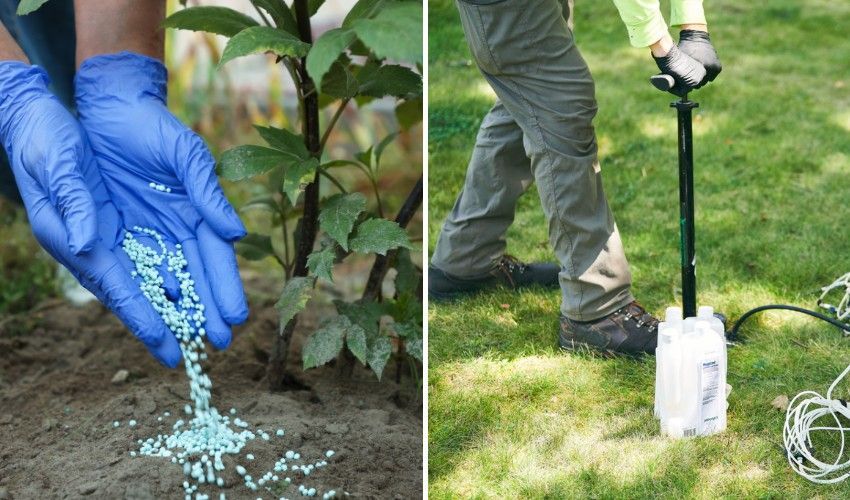
Professional deep root fertilization equipment uses high-pressure injection to deliver nutrients past the soil surface and lawn grass to reach tree feeder roots—something surface fertilizers cannot do.
When Is the Best Time to Fertilize Mature Trees in Northeast Ohio?
In Northeast Ohio, fall is the best time to fertilize mature trees . After the stress of summer, trees shift their energy below ground, making it an ideal time for roots to absorb nutrients and store them for healthy growth the following spring.
Fertilizing in fall works with the tree’s natural growth cycle. Instead of encouraging tender new shoots that could be damaged by winter, nutrients are directed into the root system, where they’re stored until spring.
There’s a cutoff, though. Once the ground becomes too cold, roots slow their nutrient uptake, making fertilization less effective. Plan your treatment before late fall while the soil is still warm enough for roots to benefit.
PRO TIP: In Northeast Ohio, the ideal window for fall fertilization typically ends around late October. If you miss it, wait until spring rather than fertilizing after the ground has cooled. Whenever possible, pair fertilization with a soil test so your tree receives the nutrients it actually needs.
Frequently Asked Questions About Deep Root Fertilization
How much does deep root fertilization cost?
The cost of deep root fertilization depends on the size of the tree, how many trees you’re treating, and the conditions on your property, so there’s no flat rate. A Certified Arborist can give you an exact quote after an on-site inspection.
How often should deep root fertilization be repeated?
Most established trees do well with a treatment every 1-2 years, though it depends on your soil and how the tree responds. Your arborist can set a schedule based on what they find during the assessment.
Is deep root fertilization safe around other plants, pets, or play areas?
Yes. The nutrient blend is injected into the soil rather than sprayed, so there’s no surface residue for people, pets, or nearby plantings to come into contact with.
How long does it take to see results after treatment?
Some improvement in vigor can show up within the same growing season, but a mature tree usually takes one to two seasons to fill back out. Older and larger trees tend to respond more gradually than smaller ones.
What’s the difference between deep root fertilization and a soil amendment?
Fertilization supplies nutrients the tree can use fairly quickly, while a soil amendment, like compost, improves the soil’s structure and its ability to hold water over the long term. Many established trees benefit from both.
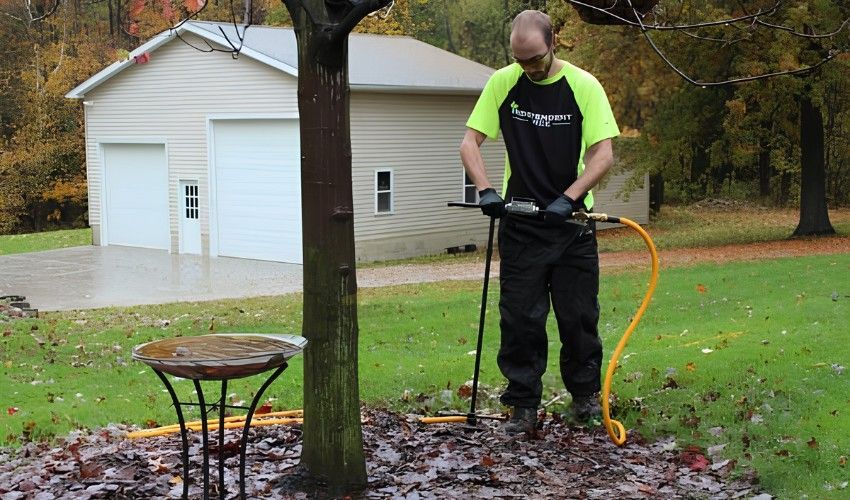
The injection probe is inserted in a grid pattern throughout the root zone to ensure nutrients reach feeder roots across the entire area under the canopy.
Let Independent Tree Help Your Mature Trees Thrive Again
Deep root fertilization can improve the health and vigor of mature trees growing in Northeast Ohio’s compacted, nutrient-poor soils. By delivering nutrients directly to the feeder roots, it helps trees recover from nutrient deficiencies and support healthier growth over time.
If your mature tree has started thinning, producing smaller leaves, or losing its color, Independent Tree’s ISA Certified Arborists can determine whether deep root fertilization is the right solution and create a treatment plan tailored to your tree. Request an estimate or call us at 440-367-4004 to set up an inspection.
Is Your Tree Losing Its Vigor?
A thinning canopy doesn't always mean a tree is in decline. When poor soil is the cause, deep root fertilization can improve root health and support stronger growth for years to come. Schedule an evaluation with Independent Tree's ISA Certified Arborists to find out if your tree is a good candidate.Recent Articles

Topics
About The Author


STAY IN THE LOOP
WITH OUR
LATEST UPDATES
"*" indicates required fields
