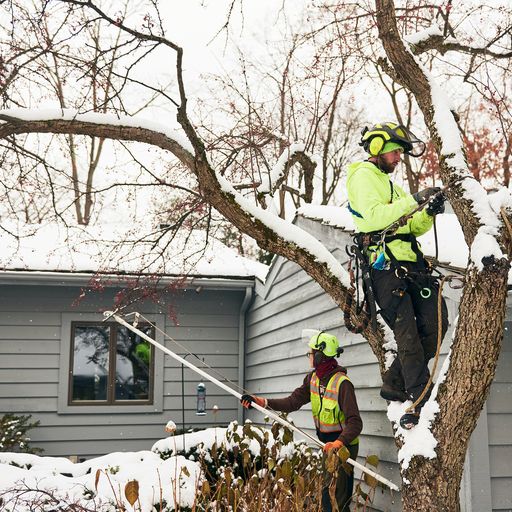
Bent trees after an ice storm are a familiar sight across Northeast Ohio every winter – branches bowed under the weight, trunks leaning at awkward angles, and flexible young trees bent almost in half. Since the recent bomb cyclone that sent snow squalls spiraling off Lake Erie while temperatures plunged 50 degrees in a single day, we’ve fielded dozens of calls asking the same question: Can these trees be saved, or is it time to schedule a removal?
Most of the time, the answer is more encouraging than you’d expect.
Key Takeaways
- Most trees bent by snow will straighten naturally within days to weeks once the weight melts off.
- Don’t shake or knock ice from branches, as this causes more damage than it prevents.
- Flexible species, like arborvitae, birch, and yew, typically bend without breaking, while brittle trees, like Bradford pear and silver maple, are more likely to snap.
- Professional support systems, like cabling and staking, can help severely bent trees recover, but this work takes time to see results and must be done correctly.
- Call a Certified Arborist if bent branches block access, you see visible cracks or torn bark, or the tree hasn’t recovered by mid-summer.
- Prevention through regular pruning and pre-winter inspections is the most effective way to protect your trees from future ice and snow damage.

Lake Erie’s warmer water supercharges winter storms, dumping heavy snow and ice on Northeast Ohio’s snowbelt counties.
Why Does Lake Erie Make Northeast Ohio Trees More Vulnerable to Ice Damage?
Northeast Ohio trees face heavier ice and snow loads than other parts of the country because Lake Erie’s warmer water supercharges winter storms with extra moisture. When moisture-laden air crosses the lake, it picks up additional moisture before dumping it on the snowbelt counties including Geauga, Lake, and eastern Cuyahoga — sometimes depositing several feet of snow in a single storm.
Winter storms actually rank among Ohio’s most costly natural disasters, as Cuyahoga County alone recorded over $34 million in damages from 87 severe winter events just between 1996 and 2021. The same report documents how ice storms lasting more than 12 hours can produce accumulations several inches thick, causing collapsed roofs and widespread tree failures, compounding the problem further.
Established neighborhoods, like Shaker Heights, Gates Mills, and Chagrin Falls, face elevated risk because their mature tree canopies catch and hold more ice than younger, smaller trees in newer developments.
How Does Ice Accumulation Damage Tree Branches?
Ice adds hundreds of pounds of weight to a tree’s canopy while simultaneously making branches stiffer and more brittle. Frozen wood can’t flex the way it does in warmer months, so instead of bending under the load, branches snap. Heavy, wet snow often piles on top of ice-coated branches, compounding the problem — and because the damage happens gradually as ice accumulates, trees can fail hours after a storm appears to have passed.
Which Trees Bend Under Snow vs. Which Trees Break?
Whether a tree bends or breaks depends on its wood density and branch structure. Knowing which category your trees fall into helps you know what to expect after a storm.
Which Tree Species Typically Bend Without Breaking?
Flexible species bend because their wood is designed to handle heavy loads. Here are some of the most popular we see throughout Northeast Ohio:
- Arborvitae: Multi-stemmed structure allows branches to splay outward under added weight.
- Birch: Naturally flexible wood designed to shed snow in northern climates.
- Yew: Dense, pliable branches that recover well once weight is removed.
- Juniper: Similar to arborvitae — prone to splaying but rarely snapping.
- Forsythia: Long, whip-like branches bow dramatically but usually recover.
It’s common to see these species bent flat to the ground after major storms in communities like Shaker Heights, Gates Mills, and Chagrin Falls; fortunately, most recover once the weight melts.
Which Trees Are Most Likely to Snap in Ice Storms?
Trees with brittle wood and weak branch architecture snap rather than flex under heavy loads.
Common weak-wooded species in our area include:
- Bradford Pear: Notorious for splitting at weak branch unions.
- Silver Maple: Soft, brittle wood that snaps easily under ice loads.
- Willow: Fast-growing but extremely weak wood.
- White Pine: Tall and shallow-rooted, prone to windthrow in saturated soils.
That said, any tree can fail under enough weight. A healthy oak that has weathered dozens of winters can still lose major limbs during an especially severe ice storm.
Will Bent Trees Straighten on Their Own Without Help?
Yes, most bent trees straighten naturally within days to weeks once the snow or ice melts. Branches are designed to flex, and as long as they aren’t cracked or broken, they will gradually return to their original position as temperatures warm.
Why Should You Wait Before Trying to Fix Bent Branches?
Waiting prevents additional damage because cold-stiffened wood is far more brittle than it looks. Shaking or prying often snaps branches, and jagged breaks then invite decay and disease that can compromise the tree for years.
If branches remain bent after the weight is gone, wait until the growing season is well underway. As sap starts flowing and leaves emerge in late spring, many branches will slowly straighten on their own. If branches don’t straighten out by summer, give us a call — there are things we can do to help the tree recover.
What Should You Do Immediately After Ice and Snow Damages Your Trees?
Assess from a safe distance — stay clear of any trees near downed power lines or with hanging branches overhead. Your best immediate actions are to:
- Wait for ice and snow to melt naturally before touching bent branches
- Move fallen debris on the ground if it’s safe to do so
- Call a professional for anything overhead or blocking access
The instinct is to help, but patience protects both you and the tree. Frozen branches are brittle and unpredictable — let them recover on their own timeline.
Do All Bent Trees Need Professional Help?
No – in fact, most bent trees recover on their own without intervention. You can safely leave a bent tree alone when:
- It was healthy before the storm
- Branches are bent by snow only (not heavy ice)
- There are no visible cracks or splits present
- Branches aren’t blocking access to walkways or structures
Monitor the tree as temperatures warm and give it time to recover naturally. Most snow-bent branches will be back to normal within a few weeks of the snow melting.
How Long Does It Take for Bent Trees to Fully Recover?
Recovery time depends on the severity of bending and whether the tree needs professional support:
| Situation | Expected Timeline |
|---|---|
| Natural recovery (snow-bent, no intervention) | Days to weeks after snow melts |
| Supported recovery (staking or ties) | 6–9 months minimum |
| Full structural recovery (significant bending) | 1–2 growing seasons |
Trees that were stressed before the storm — by drought, disease, or poor soil conditions — may take longer to recover. Spring fertilization can help damaged trees by providing nutrients they need to heal wounds and produce healthy new growth.
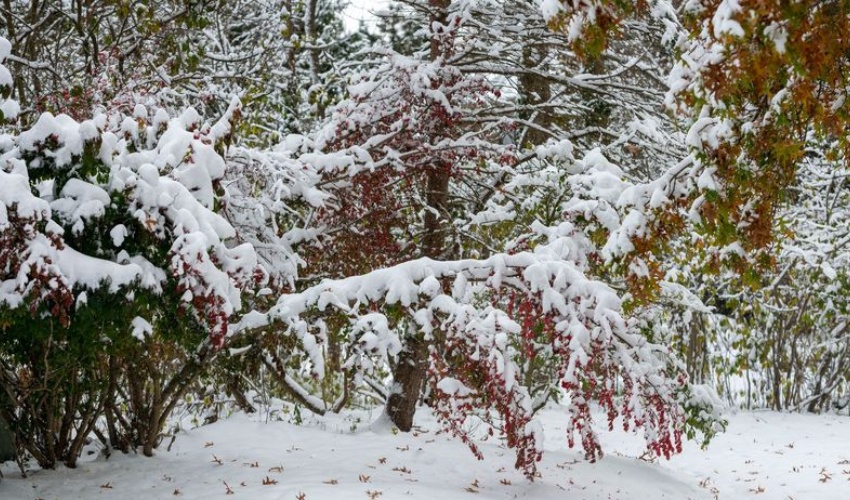
Flexible shrubs like this one typically bend rather than break under snow loads and will straighten on their own once the weight melts.
When Is It Too Late to Help a Bent Tree Recover?
If your tree hasn’t shown improvement by mid-summer, it’s likely too late for natural recovery and requires a professional arborist assessment. Trees that will bounce back typically show progress within weeks of the snow melting, so a tree still bent in July is signaling a deeper problem.
What Are the Warning Signs a Bent Tree Won’t Recover?
Look for visible changes to the trunk, major branch unions, root zone, or the tree’s overall posture. Some damage means “don’t wait — call now,” including:
- Cracks or splits in the trunk or major branch unions
- Bark torn away, exposing wood underneath
- A new lean that wasn’t there before the storm
- Roots that appear lifted or ground around the base is heaving
- Multiple major limbs broken or hanging
- Main leader (central trunk) broken on species like pines or spruces
If you see any of these signs, have a Certified Arborist assess the tree before deciding whether to attempt repair or proceed with tree removal.
What Professional Treatments Help Bent Trees Recover?
Cabling and bracing, staking, and corrective pruning all help bent trees recover by providing structural support or removing damaged sections. The right treatment depends on the tree’s size and the severity of the bending.
How Does Cabling and Bracing Help Large Damaged Trees?
Cabling and bracing redistribute stress across the canopy and reinforce weak branch unions. This work requires professional installation, as improper hardware placement causes more damage than it prevents. Regular inspection as the tree grows are also necessary.
How Does Staking Help Small Leaning Trees?
Staking holds small leaning trees upright while root systems re-establish. Northeast Ohio’s freeze-thaw cycles can slow recovery, so trees may need support through two full winters. Stakes must be removed once the tree stabilizes to prevent girdling.
How Does Corrective Pruning Help Storm-Damaged Trees?
Corrective pruning helps storm-damaged trees by removing damaged branches and rebalancing the crown’s weight distribution so the tree can redirect energy toward healthy growth. This work doesn’t have to be done immediately, as long as it’s completed before trees start growing in spring.
Critical Warning: If someone offers to “top” your tree to remove storm damage, decline. Topping is the worst thing you can do to a tree, creating weak regrowth, decay, and long-term structural problems. A Certified Arborist will never suggest or perform this poor practice.
When Should You Call an Arborist for Storm-Damaged Trees?
Call an arborist when the damage is more than a few small branches you can safely prune from the ground, or when you’re unsure whether a tree can be saved. A professional assessment tells you what’s realistic and helps you avoid costly mistakes.
Call immediately if:
- Branches are blocking access to your home, driveway, or walkways
- You see cracks, splits, or torn bark on the trunk or major limbs
- The tree is leaning significantly or the ground around the base is heaving
- Broken branches are hanging in the canopy
- The tree is near power lines (call the utility company first)
These situations all warrant immediate attention. However, you can afford to wait and schedule a tree assessment if you notice:
- The tree hasn’t shown improvement by mid-summer
- You’re unsure whether corrective pruning can restore the tree’s structure
- You want to prevent future damage with cabling or structural support
A professional arborist will tell you what steps need to be taken and the likely results. If an arborist tells you that a tree is a hazard and beyond saving, listen closely — arborists are concerned with the health and safety of trees and won’t recommend removal unless it’s truly necessary.
How Can You Prevent Trees From Bending in Future Ice Storms?
Prevent ice storm damage through regular professional pruning, pre-winter inspections, and protective wrapping for vulnerable shrubs. Prevention costs far less than repair or removal.
What Year-Round Practices Prevent Ice Storm Damage?
Year-round tree care addresses structural weaknesses before storms arrive:
- Regular professional pruning keeps crowns balanced and removes weak branches before they become problems
- Pre-winter inspections identify structural issues, decay, and pest damage that could lead to failure
- Proactive cabling for mature trees with known structural weaknesses
Frequently Asked Questions About Bent Trees After an Ice and Snow
Is a bent tree more likely to fall?
A tree that’s bent but shows no cracks, splits, or root heaving isn’t necessarily more likely to fall — it’s demonstrating flexibility, which is a strength. However, a tree that developed a new lean (not just bent branches) or has visible damage should be assessed by an arborist.
Will my homeowner’s insurance cover bent tree damage?
Most policies cover tree removal only if a tree falls on an insured structure – not simply because it’s bent. If bent trees caused structural damage, document everything with photos before cleanup and contact your insurance agent.
Can I speed up recovery by fertilizing bent trees right away?
No, fertilizing immediately can actually stress trees by pushing growth before roots are ready. Wait until spring, after the tree shows signs of recovery, and prioritize proper watering in the meantime.
Should I prune bent branches to reduce weight?
Wait until the tree recovers before pruning. Removing branches while the tree is stressed can slow recovery and create entry points for disease. Once the tree straightens, corrective pruning can address any remaining structural issues.
Do bent trees become permanently weaker even after they straighten?
Trees that bend without breaking typically regain full structural integrity. However, trees with internal cracking or bark damage may have entry points for decay — an arborist can assess whether hidden damage occurred.
Need Help with Ice and Snow Damaged Trees in Northeast Ohio? Call Independent Tree!
Northeast Ohio winters are hard on trees — but most of them are tougher than they look. If your trees are still bent come spring, or you’re seeing cracks and damage that concern you, Independent Tree can assess what’s worth saving and what needs to go. Our ISA Certified Arborists serve homeowners throughout Eastern Cuyahoga, Geauga, Portage, and Lake Counties — from Shaker Heights to Chardon, Hudson to Mentor.
Request an estimate online or call 440-564-1374 to schedule an evaluation.
Worried About Storm-Damaged Trees? We'll Help You Decide What to Do.
Some bent trees bounce back on their own. Others need professional help. A quick assessment from our ISA Certified Arborists tells you which trees can be saved and which ones need to go.Recent Articles
Topics
About The Author


STAY IN THE LOOP
WITH OUR
LATEST UPDATES
"*" indicates required fields